
Books
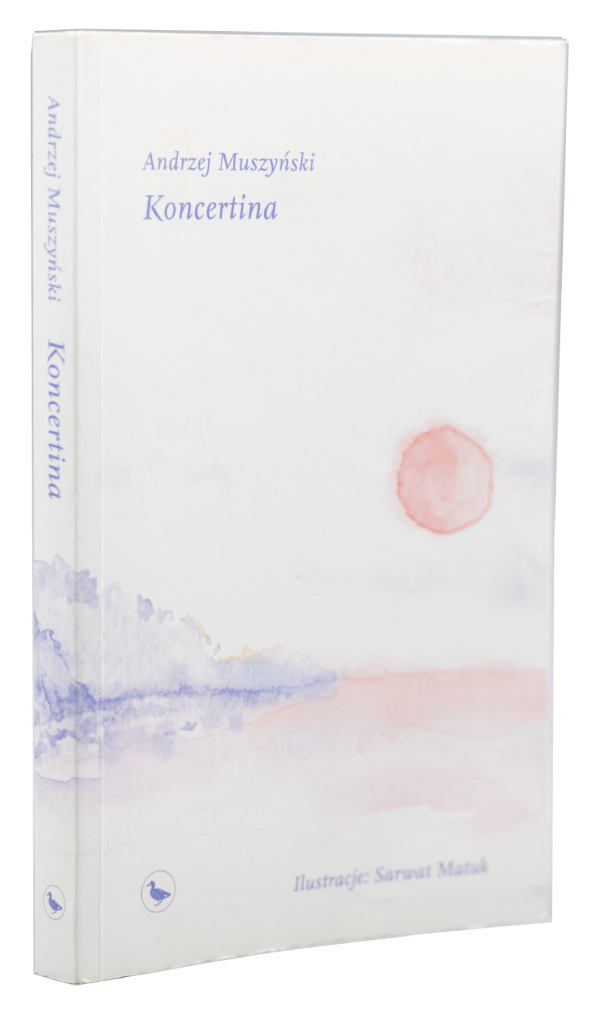
Koncertina
During the Poland-Belarus border crisis I met the Syrian artist Sarwat Matuk, who became the co-author of Koncertina [Concertina, Wydawnictwo Cyranka, 2023]. Sarwat contributed illustrations for my prose and her own poems. It’s a very personal story of childhood, refugee life, and xenophobia.
Koncertina - read the excerpt
Past Chefchaouen, the bus wheezes exhaustedly up the sheer side of the Rif, overgrown with dense, prickly vegetation. I find a seat at the very back. Next to a broken window there’s a guy smoking kif, the local strain of pot, rolled up in a joint. Just now we’re passing through the region where the illegal farms are. The guidebook warned us that this is a very dangerous area. Half of the passengers are smoking cigarettes. Suddenly, in the middle of this mountainous nowhere, the driver pulls to a stop. I lean out to see a whole family squeeze into the bus. No buildings in sight. The old man’s face, dark purple, is that of a highlander in a near-tropical zone. He takes the free seat next to me (thank you, my little journal), while his wife and many kids fight for some space up front.
Again and again, as I read for the first time, with flushed cheeks, this text written twenty years ago, up float the faces suppressed by my operational memory. I’m tricked by narrative continuity into a sense of reliving those moments. But there’s also the troubled realization that memory does not remove images permanently, only withholds them. Stored there, perhaps, is a record of our entire life, to be called up with the right reagent, such as the scribbles in this Moroccan square-grid notebook. The author – and, years later, the reader – follows their own history from the vantage point of a different time and space, as if it concerned someone else. Identifying with the protagonist takes a certain effort, because the two are the same only in a technical sense – which finally results in something of a personality split, duplication of experience, and dread of what will happen in a moment, even though it has happened already (Dima’s mother always said that praying for what’s past is a worthwhile effort, you can still do some work there).
Apparently, the new passengers are Berbers from a mountain village. God knows how long they had to walk to reach the road. Once the bus is on the move again, it takes the ticket inspector just a few brisk steps to reach the man sitting next to me. I can’t tell the exact moment at which their conversation becomes a quarrel, festering like an irritated wound. Mouth agape, I watch their bodies quickly give in to a nervous convulsion. The wrangle seems to reach its peak, but the main actors stretch the scale of sounds and gestures some more. I’m pretty certain we’re at a stage where knives will have to come into play. Suddenly, as if nothing’s happened, the ticket inspector lets it go. A moment later, however, he’s back. It all flares up once more, even worse this time, and then again, in cycles of screaming and silence. It’s all deadly serious.
Nor does it stop until the bus rolls down the Rif’s southern slopes and the driver announces a halt. He opens the door just a crack. The heat forces its way in like a fare dodger. The air has the taste and the colour of iron; I gaze through the window, waiting for those at the front to exit before us.
I trace the route that brought me to dread. What instantly attracts my attention is a face there, outside the window: a boy not much younger than me. Something about this shadowy figure’s darkness seems to repel light, layers of which gather in front of him, laid on like greasy paint. The boy stands next to slabs of veal on meat hooks that sway in the wind, swarming over with near-stuck flies. He doesn’t look away, turning over in his hand a bloodied knife, long as a khanjar. His features are new to me, and unpredictable. He reminds me of Wiktor, a broad-shouldered thief we feared as kids back in the village, the only person I knew who did time. But the Moroccan’s face is even more raw and angular. He’s missing a few teeth. The most vivid splotch of colour on his body are the bright red gums.
“They’re gonna fucking murder us here,” Roki says.
It turns out my memory had suppressed most of the events and the people salvaged by the journal, but not the dread at the sight of that face. And that’s good. Even though the tv channel that Dima watches has never shown the face of a refugee.
Translated by Krzysztof Majer
a
In my debut volume of poems, titled a, published in 2023 by Wydawnictwo Biblioteki Śląskiej, I returned to my literary roots: my first attempts at writing had been poems.
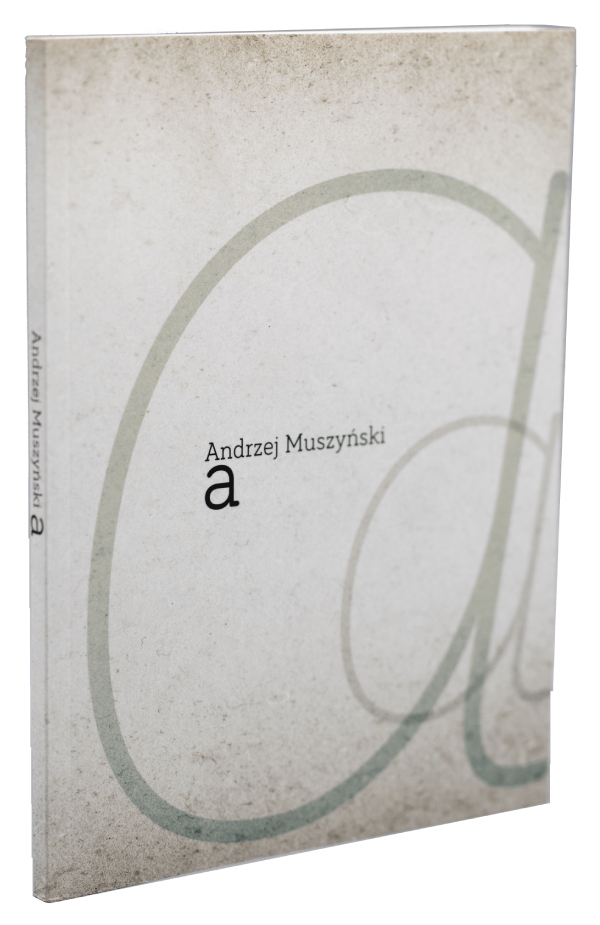
a - read the excerpt
VII
Four in the morning.
Thoughts sleep like drunkards
and the world stands still.
I feel I can stir it
with a flick of a toe.
Behind the drywall sleeps a sweaty infant.
In eighty billion years
everything will disappear.
At breakfast we’ll figure out
how to find each other.
XVI (Balconies)
There are evenings in the middle years
when, like at the bottom of a glass, the
the horizon is red, but
the sky as indigo as Lake Śniardwy.
Eleven floors below
people compact as cartridges
resisting time, contradicting themselves,
on this evening, on the balcony,
time penetrates through her
as if through a fabric and unravels her memory
across the blackness of the streets.
And it is lost.
The city hums and swarms with first
lights and better halves.
Translated by Mark Tardi
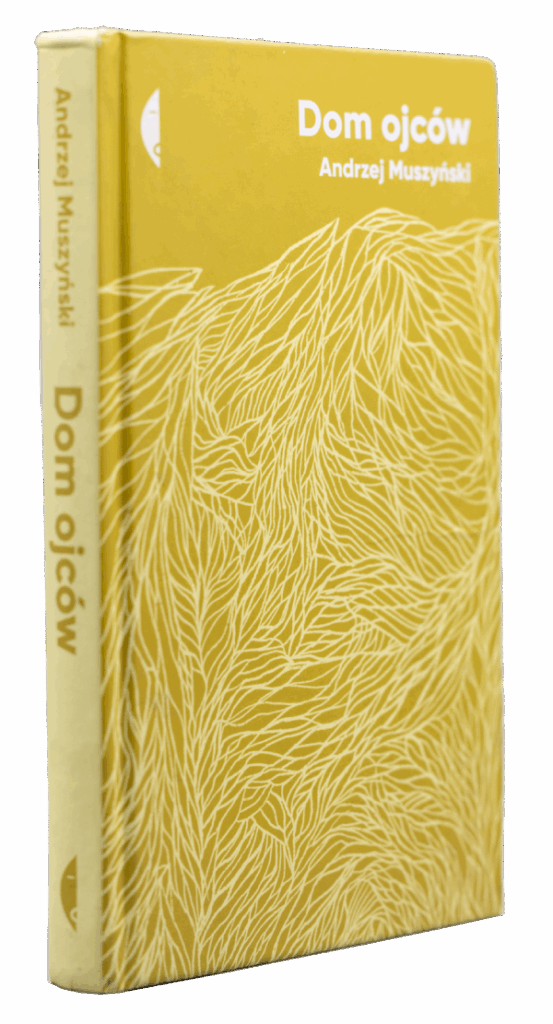
Dom ojców
Dom ojców [The House of Our Fathers; Wydawnictwo Czarne, 2022] is an autobiographical tale of farming, prehistory, and the universe of rock formations. It received the Cracow Book of the Month Award. It was also nominated for the Nike Literary Award and the “Angelus” Central European Literature Award.
Dom ojców - read the excerpt
The fifth day or so we started our daily conquests of the baï – meadows in the middle of the forest, in low-lying areas. We were waist-deep in mud and our trousers would split at the crotch. We threw chopped-off branches in front of us, trying not to sink. The Baka smoked a lot of cigarettes, especially in the evening, by the fire, and I already knew that we wouldn’t be sticking to the plan, because yesterday was a copy of tomorrow, and today – a copy of yesterday. We had become part of a mosaic of time that was all shattered to pieces and couldn’t be put back together. In the evening we tried to impose some order on things. To count the days and nights that have gone by. But what was the good of numbers when we were simply happy to be near a fire? To have shucked off our clothes, sweaty and damp all through, heavy as sheepskin? And reeking even worse, I’d bet: really sour. The Baka went around dressed lightly, sometimes half-naked. We still had our long sleeves on, wary of malaria-carrying mosquitoes, of insects and of snakes in the thicket. Hissing and – no joke – deadly venomous. In the humid air our skin grew doughy. What do you reminisce about by the fire in the most ancient of the world’s forests? Perhaps only the last couple of hours: there’s nothing to be said any more about the previous day. Our memory functioned differently there. So we talked about the Gaboon viper that appeared on the path a few hours earlier. Nestor whacked its neck with the machete and the head fell off. Alex gutted it, sniffling all the while, dragged out a few undigested mice and tossed them in the pot.
Our bodies are stiff as boards. They seem made of a different substance. We evolve from day to day, but it’s as if we were evolving backwards. We’re happy because we have a place to sleep for the night. We’re happy because we have something to drink. We’re delighted because there’s food. Finally we reach territories unknown to the Baka, and there we find a clean stream. We’re hardly alone. There are many animals around, free and wild, bigger than us. We share this space with them. That’s why sometimes they already seem human. No one orders them around. Elephants, African buffaloes, black panthers, pythons. No chimpanzees: those have been killed off by the Ebola virus. Nothing separates us from these animals. They harbour an alien consciousness. Knowing this changes everything. We look around ever more attentively, inhaling various odours. Can the Baka, with that sixth sense of theirs, smell terror, joy, pain? They’re certainly able to see and smell much more than us. This also we know already.
The present has grown vast like this forest, because from seven in the afternoon until eleven before midnight there is ten times more to do than there would be at home. You have to clear some of the thicket with machetes to make camp for the night. Getting a good night’s sleep is important. We pitch our tents every evening, we hang up our hammocks. We rinse cups that can’t be rinsed clean. We scrape dried bits of food off with a knife. We bring water in skins. We dry our clothes by the fire, something falls in, we salvage it. We cook rice, we put salt in rice. We eat greedily and drink water, and our stiff bodies get heavy and homogeneous, as if they weren’t made up of separate organs any more. The mind seems to slide down our arms, our stomach, our crotch, our thighs. We think with our entire bodies, we think more clearly at night. During the day we also hack at the trees with machetes. For eight hours straight. By the evening, we’ve gone three kilometres. Through sequences of identical movements our bodies seem to leave traces, like holograms. Their particles float in the air and stick together. Augustin has been waving the machete around for five hours, and at last he collapses on it – spurts of bright blood are soaked up by the leaves. This brings back the sharpness of vision because everything now is either green or black. Dreams meet reality halfway, never as intense as after two weeks of marching through the wilderness. At dawn we tell them to one another like real events: paintings on canvas, still oily wet.
Translated by Krzysztof Majer
Bez
The novel Bez [Less; Wydawnictwo Literackie, 2020] tells of infertility. It received the “Identitas” Foundation Award and was nominated for the Gdynia Literary Prize. It is an attempt to describe both the sense of leading a lonely, hollow existence, and the miracle of life.

Bez - read the excerpt
Once she’s started working on the Lorenz radio, a piece of its casing chipped off, she switches on her father’s Saba. People forget that the quality of sound is best evaluated at low volume. Radio engineering enthusiasts know that the most sensitive carrier of all is the ether – the pure reality through which encoded words travel at lightning speed. Joanna opens the box, blows at the dusty Philips valves, and once again, just like in her childhood, she takes stock of space’s passion for salvaging our words. The unity that it creates. The array of its languages. Say “less”. Space never sleeps. Even the wind respects this. Already the syllables inscribe themselves in the acoustic wave, pushing against the diaphragm of the microphone. Everything – our tone, our pitch, our timbre, our mood – is recorded in that endlessly intricate phantom. A coil, a capacitor – and, once upon a time, carbon dust, agitated by a sound wave – these alter the electrical resistance, and so the current. The sounds are faithfully translated into the language of electricity, whose amplified vibration reaches the transmitting antenna, forming an adequately shaped electromagnetic wave. It never dies. With an ultrasensitive apparatus, Hitler’s roaring might be received somewhere near Andromeda. Information floats through eternity and will travel until the end of the world, and when all matter finally disperses, perhaps it will once again fuse into a word, and from this a new world will be born.
Joanna unscrews the casing and puts it aside. A quick assessment of the mechanism, and she knows just where to start. The structure’s clear. The capacitor works. One valve, an N14N, Soviet-made, is faulty. Joanna replaces it with an original one to rule out a malfunction in the others. Then she tests the speaker transformer. If all the rules of the art are observed, everything should work. For a long time now she’s held to the belief that the interior of an old valve radio can give you a glimpse into the mechanism of life itself. The same kind of obedience, essentially, can be observed in a biological cell. Once she watched a visualization on YouTube and couldn’t sleep all night. The lipid rafts follow their languid drifting course through the sea of the cell membrane; the motor protein, like an elephant at a tree-felling site, does the dirty job of transporting cytoskeleton bits with its trunk; the mitochondrion, sprawled on the five-line staff of filament, restlessly performs oxidations of organic compounds; the ligands, part of the oldest telecommunications system, carry messages to receptors in other cells, with no interference to other signals (something that, in the field of technology, we only learned after Stalin’s death), a vast system of switches – molecular, rotaxane-based, catenane-based, what have you – in which the stimulated molecule changes its state; the wrinkled Golgi apparatus, the cell’s supervisory board, hovers imperiously above the disciplined workers, distributing their output. The nucleus, the board of directors, observes religiously all the regulations of life to protect the spindles of DNA, which will undergo division when the order comes, and inside the fertilized cell the sticky filaments of the microtubules form two cylinders heading towards each other to create the cones of new chromosomes, containing their entire heritage of forms, the art of the most refined legislation, the freely transmitted knowledge on how to repeat the entire process. But before blood is pumped into the lung and heart rudiments, which it will kickstart for several dozen years, before calcium precipitate takes the shape of the spinal axis, before the eye orbits are carved and filled with that wondrous ink, fourteen days since fertilization, just before the forming of the primitive streak, which many philosophers see as the beginning of that individual entity that is a human being, the embryo takes the shape of a coffin. At least that’s how they depict it in textbooks.
Joanna removes the cold valve. That’s right, billions of slaves bust their guts for free will. It’s the sort of repression not yet known to human society. But why rule out the possibility that there, in the stocks of tendons, among the rushing masses of protoplasm, rebellious molecules are growing, a threat to the despotic rule of the life mechanism?
– Madam, are you certain that your husband…?
Not to worry. It’s only interference.
Translated by Krzysztof Majer
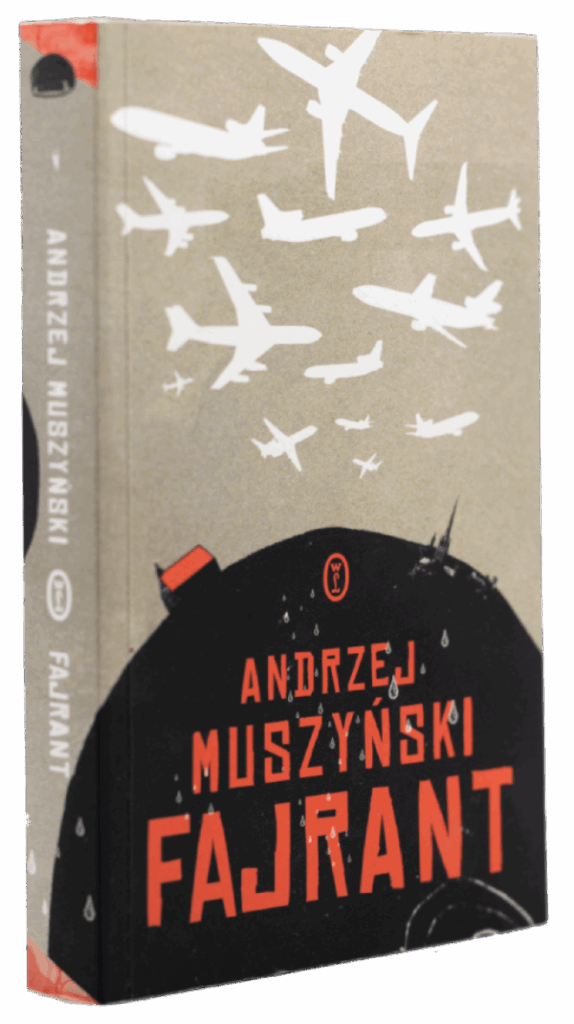
Fajrant
The novel Fajrant [Knock-Off Time; Wydawnictwo Literackie, 2017] gives voice to the precariat of the Polish start-up era and the community of Polish migrants in Great Britain. Extensive fragments have been recorded and broadcast by the Polish Radio 3. At the heart of this tale is money.
Fajrant - read the excerpt
So: a whole day with grandpa. He always washed his hands carefully, dried them with a towel, turned off the radio, and sat down next to me at the kitchen table. The wallet was black and thick. With the fingers of one hand he’d spread the main compartment and slide out a batch of notes with the other. The wallet had a side window with a black-and-white photo of grandma when she was young, and sometimes a fish scale would fall out of there. The bills were always clean and smooth, as if ironed or counterfeit. He would lay them out on the table like a deck of cards, a fan of intaglioed faces. The one with Kościuszko was the least credible: brownish, faded, hardly worth anything. That’s why you’d roll it up as thinly as possible, and then, as you stood in the long queue at the co-op store, shape it into the hull of a tiny boat. No other way to smooth it out. A twenty zloty bill, with Traugutt, I think, looked like a picture of Virgin Mary with a moustache. Opening the drinks cabinet once, and seeing copies of it held together with a rubber band, sent me into my first ecstasy. They should carry that bill around framed and draped during the Corpus Christi processions. In place of the Virgin Mary – a little rectangle with the pale green Traugutt. When mother brought them for the first time, after the co-op paid her, she put one away on the sideboard. That night she and father inspected it for a long time under the bedside lamp, like some unidentified and suspiciously valuable discovery. Uncle Lolek – one of those who die before we’re five years old, and are remembered only as a bear with a human face – would bring red, almost transparent bills with Ludwik Waryński on them. Uncle Lolek reeked of vodka, and then also of cheap cigarettes. He would press a batch of reds into my hand, grinning, and mother would repeat endlessly, ingratiatingly, only for ritual’s sake: “Really, Uncle, you shouldn’t have”. – And I would hold them against the sun, their edges yellowed and frayed. Through them, in the sharp morning light, I saw my parents’ and grandparents’ gabbing faces, dark and ominous, but for long minutes at a time, as I studied the magical piece of paper, their voices would fade. Then they’d resurface, usually with something along the lines of “that one buys binoculars off the Russians, sells them slippers, you know, he’s got deep pockets on him”. Stuffed like leaves into sacks, sticking out of bags like vegetable tops, deposited in safes, or belonging to no one, like the rarely seen fifty grand bill with Staszic on it that flew off, after some festivities, into the pine grove beyond the town, followed by the Epicurean eyes of a dog whose drunkard master lay senseless in the middle of the street. The two million zloty bill, with Paderewski, was as good as galactic, orange-and-purple, like something out of Star Trek. Car bazaars was where these mostly circulated.
Later, when they told us to exchange all those bills for new coins, it was if they’d deprived us of cousins. You couldn’t stuff the money down your underpants any more. It weighed more than all the clothes you had on.
So before I went to school and learned to write, I was able, thanks to grandpa, to count them. I’d start my day sitting by an Indian chest, a present from our uncles, in which I’d tally up the bills laid aside. I’d caress them and smooth them out. I’d smell them: old leather. I’d add new ones, believing that one day Kościuszko would multiply like strep. After all, I’d made sure he had the same conditions as at the bank – it was just as dark inside.
Translated by Krzysztof Majer
Podkrzywdzie
The novel Podkrzywdzie [Harm’s Den; Wydawnictwo Literackie, 2015], written in the spirit of magical realism, is a private myth, created in order to comprehend my own peasant roots and to habituate myself to the effects of inevitable cultural change. I drew the inspiration not only from Polish folk culture, but also from the culture of Islam. The novel was nominated for, among others, the Polityka Passport Award, the Gdynia Literary Prize, and the Silesian Literary Laurel. The book’s entirety has been recorded and broadcast by the Polish Radio Three; it has been translated into Russian.
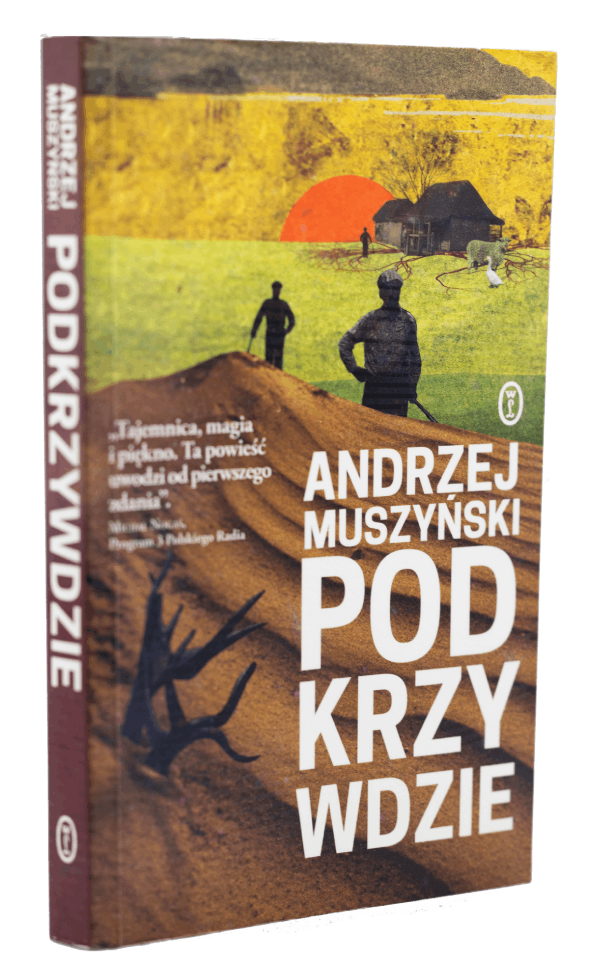
Podkrzywdzie - read the excerpt
from Chapter 1. The Book of Sacrifice
It was at the time when my grandfather, brushing himself off from stacks of crisp collards, began going to Harm’s Den more frequently. Every morning, waking angry and disheveled, he would massage the throb of his clotted veins, pour a ladleful of icy water over his head, and, with a frenetic edginess that wasn’t like him, begin bustling around the goats, geese, and piles of damp feathers. With each day he seemed to shrink, his skin sagging, as if the summer, almost gone now, was abandoning him for good, leaving behind the usual: an empty, soured husk and black tunnels of memory, which he tried to stuff with anything that came to hand as he rummaged frenziedly in the chaff piles. From day to day his eyes whitened, like those of a distracted hen at first, until one night they collapsed altogether, sending me, horrified, into a spell of exhausting nightmares. At that time I used to sleep on top of the oven or with my grandmother, nestled into her warm, plump thighs, always waking her and upsetting her sleep with my excursions to the chilly outhouse to force the last drops of milk out before midnight. Then my grandfather began his somnambulic dances with the candle. In those days the drunken half-turns and about-faces – upon which my grandmother and I, well accustomed to them, would usually look with slight mocking – gained momentum: a starfish of fiery glow, my grandfather would end up chasing himself, spinning like a top, doubling and redoubling, dissolving in reflexes, until, swallowed up, he vanished from our sight. My grandmother would get up a little later, and even though, searching for some explanation and a bit of comfort, I gazed pleadingly into her eyes, cast down on a bowlful of sour barley soup, her silence only deepened.
It hadn’t yet got cold enough for grandfather to start burning wood in the stove, but the woodshed was already filled to the brim with colossal logs, their different cross-sections on display. He and the Constable had been bringing them there all summer. Stacked into a pyramid, at night the logs would whine softly, and mornings my grandfather, as if out of malice, would tug branches from out the middle, until the whole load came crashing down into mounds of sawdust that rose, sparkling, calf-high. My grandmother and I would wake screaming, and when we met grandfather, now returned from the barn, over a morning mug of milk, we saw that, in spite of all that commotion, he hadn’t salvaged the lost thoughts which, not so long before, had allowed him to run big things.
It was just then, as I sat on a low stool out on the porch, leaning over a small bucket into which I flipped potato peelings with my thumb, that I saw in my grandfather someone I didn’t recognize. It was the way he slipped through the door – his step brisk, timid – all covered in gore, gazing somewhere far beyond the orchard. Resting on his shoulders was the axe, and fresh blood was trickling over his hands, between his fingers, seeping down his swarthy, balled-up muscles onto his trouser legs, hardening in the folds of his rolled cuffs. Without telling me, my grandmother, or even the Constable, he decided – before winter, or perhaps eternity, set in – to slaughter all the gabbling gaggle. From that day on, a delta of pungent blood coursed the farmyard, oozing through slits in the wooden poles, down furrows in the heated-up earth, to mix with kitchen scum and set under the fence into berry-black ponds, with sun-bleached white worms lazing at the edges.
I looked on in astonishment as my grandmother, wont to shout and bang the table with her fist during grandfather’s bouts of madness, now only sat in the hall with her back turned, until the dark stripped her of her right to existence. Nor did the following days bring any change. At that time we had thirty-four hens, a few more geese, not quite as many ducks. Plucking the feathers off one goose took up at least an hour, and I know this because ever since I learned to peel potatoes to a thinness almost translucent, my grandfather began bringing me along for that stern butchery.
I slid into the stifling gully of the barn, caught at one of the long wooden joints, set the right-hand door ajar, and for the first time watched up close how grandfather rounded up the terrified geese in a corner of the yard, brought his chosen prey down with the rake, grabbed its legs with his right hand and the beak with his left, strode up to the blood-blackened oak stump, placed the swanlike neck on its edge, and ordered me with his unseeing eyes to grip the handle. Rearing his head up to the sky, he half-closed his eyes and waited for me to do what had to be done, because from now on that part of the job would fall to me.
The axe, heavy with July rainwater, bent my joints the wrong way. Taking a deep breath, I heaved it up above my chin, but, too weak to master its trajectory, I let it drop straight on the ruffled neck, which spouted thin blood like a geyser into our faces. Grandfather opened his eyes, pushed me aside so hard that I tripped on a fodder trough and fell right under a bleating goat’s teat, while he grunted, scornful, and with gritted teeth, lifted the axe, blotting out the sun, and slammed it so hard on the surviving tendons that the goose head rolled all the way into a curled loop of wood shavings. He brought the trunk – hung by the feet, neck down – over to a high well brickwork to let the blood run out, and hurled the quivering carcass into a huge wicker basket.
An hour, I’ve said. Yes, we would sit down facing each other at a tall table bristling with nails as our thoughts delved in the essence of anserine non-being. Sometimes grandfather would leave me on my own, going out to the kitchen to take the whistling teapot off the stove or to soak the feathers, hard as a stirrup. At first he had me holding the goose, clotted gullet down, while he doused all of the carcass with boiling water, which seeped into the most secret recesses of the thighs, wings, and the bristly crotch. He would put away the empty bucket, take the scalded piece from me, toss it onto the greasy tabletop, and once again sink into the timelessness of feather-plucking. An hour – but with two of us at it. Because each took up his chosen portion, took it as a point of honor to be quicker than his rival to glance, underneath the plumage, the pink, lumpy skin, and the eyes would stint on blinking to keep up with the fiendish hand gymnastics. I would get sleepy. Taking advantage of our distraction, the world around us dissolved into a liquid mosaic: objects broke loose from the eye’s leash, numb fingers scrabbled mechanically in the fuzz, and then, all of a sudden, grandfather would wake me, roguishly flipping the goose bulk upside down.
Translated by Krzysztof Majer
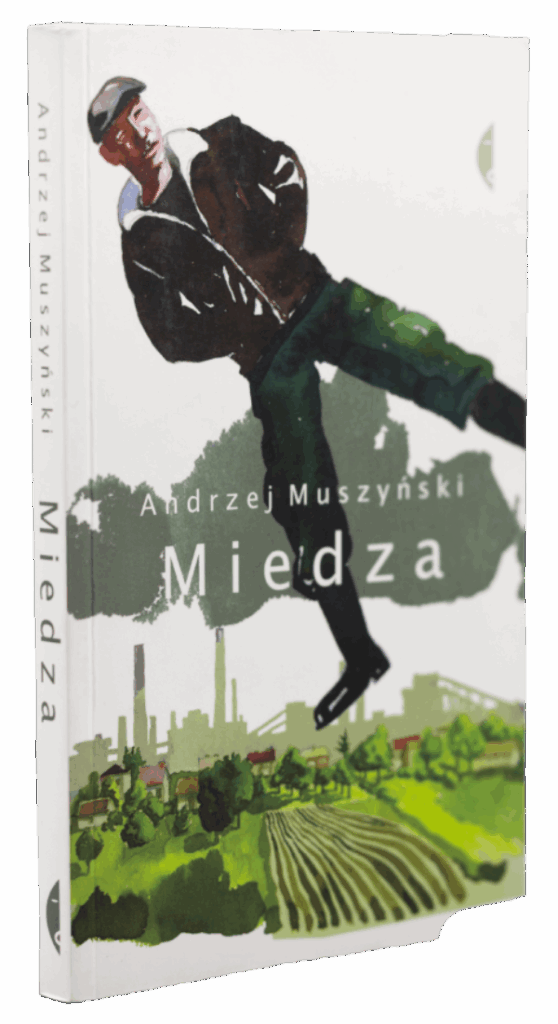
Miedza
The short story collection Miedza [The Balk; Wydawnictwo Czarne, 2013] was my fiction debut. It tells of the Polish provinces in the 1990s and of the rapid changes resulting from our accession to the European Union. It’s a story about losing the old world. The collection was nominated for the Gdynia Literary Prize. The short story titled “Trawy, trawy, zimne gruszki” was also awarded the main prize at Wrocław’s International Short Story Festival.
Miedza - read the excerpt
There was a source to every sound. Try as it might to lead us astray, we caught on fast. The slaughter of the heifers, the scrape of scythes on the whetstone, fence boards thrown against the dancehall walls, the surging roar of farmyard bench saws: lying in a clump of spiny thistles, flicking away the flies and the heat, we would prick up our ears and guess. The risk of guessing wrong was low, especially when it came to trains: you could only ever hear the Russian ones. They clanked in on broad-gauge tracks that ended just a couple versts further. All the way from Vladivostok, via Omsk, Novosibirsk, maybe Perm – and that, for all the tea in China, we couldn’t imagine. Our ears to the ground, we’d listen to that thudding, booming post-Soviet dread. It died down at last, tons of rust-blown forged steel with shit-stained Cyrillic would brake two kilometres before the beginning of their end, not to smash into smithereens against the newly built pro-western factory halls. We couldn’t sleep nights for the rattling of the windowpanes.
The coarse wind off the sprawling fields stripped us of all we might wish to hide: our hunches, our thrills, our secrets. Everybody knew about the welcomes – and the farewells. Those were the worst. We bade farewell to someone and he would ride away, such was the meaning of this. We’d always wait until he vanished in the woozy distance. Probably not an illusion, either, that wooziness. We waited for the vanishing. That’s what a farewell was about. There was a whirring hum of faded, rain-heavy carboard boxes, pushed over ground in a rough gale. I remember these farewells as isolated, never more than two or three people at a time, but to us it was like saying goodbye to an army of allies. We were the ones who’d remain on the field, to keep up the fight that was as familiar by now as it was inscrutable. Then everyone went their separate ways, looking for signs. Scissors would fall off sideboards. Grandpa would throw on a black suit.
And then, in the morning, once again we’d go out: neighbours, mothers, fathers, brothers, children, sisters. From this distance you couldn’t hear us. We bustled about the dung heaps and the wagons of tattered hay. The tractors moved sluggishly, wheels spinning in wet earth. We’d pick spuds and tomatoes, fork hay onto the wagons. We took off our t-shirts and let the sun tan our marble and pink skins. In autumn we burned everything and chucked potatoes into the embers. The horses ploughed the field. The peasants got up before dawn, swallowed a bowl of hot milk. Maybe those really were loops of some kind, cycles. There could be no exiting that world. Birth, Baptism, Communion. The wedding, then the building. Because right after the wedding everyone would start building, next to the father’s land or somewhere further afield. No divorces to speak of. You’d get up to get something done. You’d get up to do some more hammering and cutting, some more measuring and spiking. No tense but the present, countable nouns only, a safe drifting on the surface. No great desire to race off on a violent charge – only Saturdays, if ever, and it meant something else then. We’d walk out the door with the sort of vigour that descends on a man only between daybreak and the first blast of sun: quick, no dawdling, with a slap to a black horse’s steaming rump.
Translated by Krzysztof Majer